
The dating app where music does the matching.
Co-Founder & Lead Developer · Vibin' LLC
Researched, designed, built, and launched in about a year: a cross-platform dating app where curated music identity replaces the photo-first swipe.
Live now on the App Store and Google Play.
- Researcher10-dimension market and audience analysis, teardown of nine competing apps
- StrategistMVP scope, subscription pricing model, and the full go-to-market plan
- UX DesignerFive primary flows, with onboarding as the load-bearing moment
- Visual DesignerA full brand system carried through three distinct identity phases
- Frontend EngineerReact Native, Expo, and TypeScript, styled end to end with NativeWind
- Backend & Security EngineerSupabase and PostgreSQL, row-level security on all 52 tables, 21 edge functions
- QA TesterPhysical-device testing on iOS and Android, TestFlight beta rounds
- Compliance AuditorAI compliance agent system, resubmissions cleared on both app stores
- Launch OperatorEAS build pipelines, both store listings, ongoing release management
Dating apps optimized for attention. Not connection.
A twelve-billion-dollar category runs on swipe mechanics that produce burnout. Music taste is a stronger signal, and nobody had built around it.
Mainstream dating apps drive first impressions from photos and short bios; the result is shallow engagement and high churn. Shared music taste is among the strongest predictors of social bonding, yet no major app builds matching around structured music-catalog data as the primary signal. The timing sharpened in June 2025, when Tastebuds, the pioneer of music-based dating, shut down over an aging codebase and left its users with nowhere to go.
The research behind it
Before any code was written, the market got a full workup:
- A 10-dimension audience analysis grounded in cited third-party statistics
- A competitive teardown of nine apps covering founding stories, funding paths, and vulnerabilities
- A 20-question branding survey of 50+ users that validated the palette and logo direction before final assets were committed
- A go-to-market patterned on how the category leaders actually started: soft launch six to eight weeks before hard launch, city-first density, festival-season timing
Your music identity is the profile.
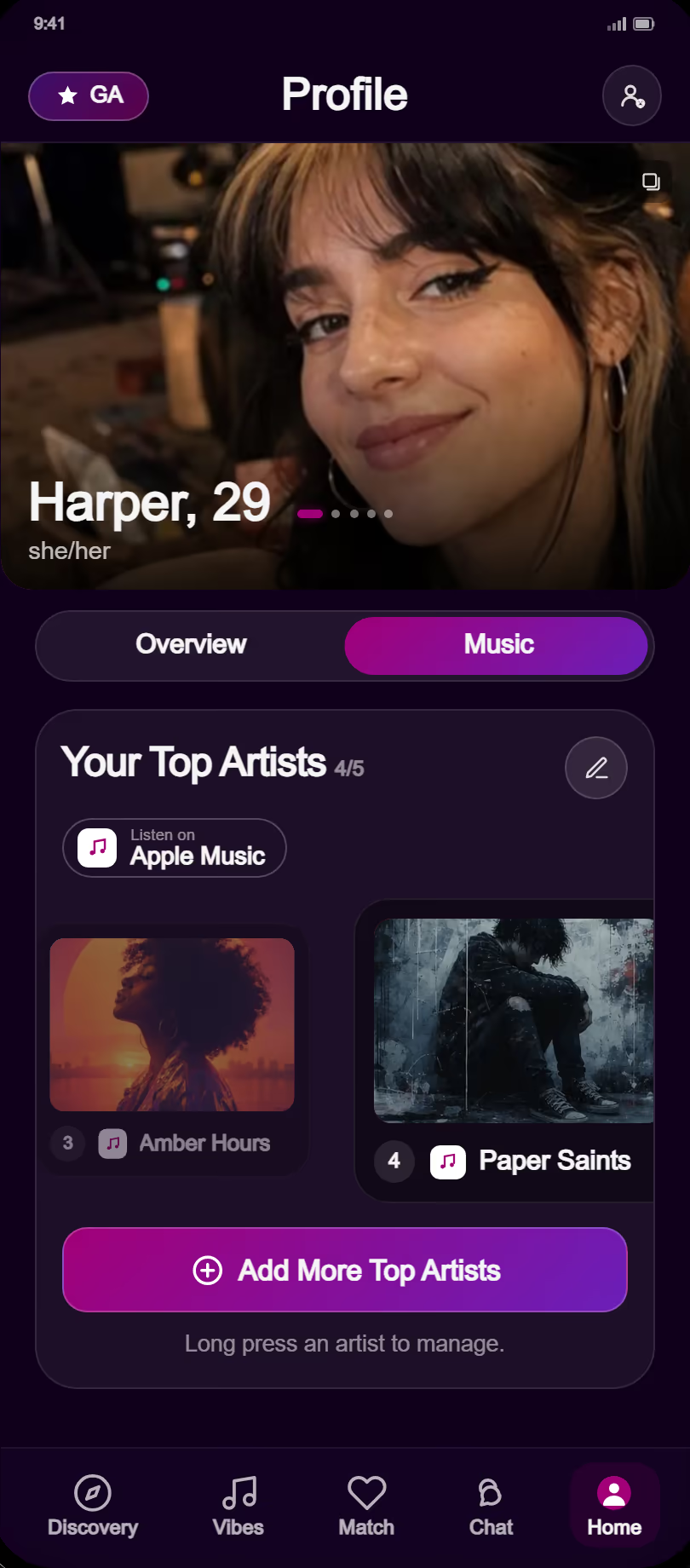
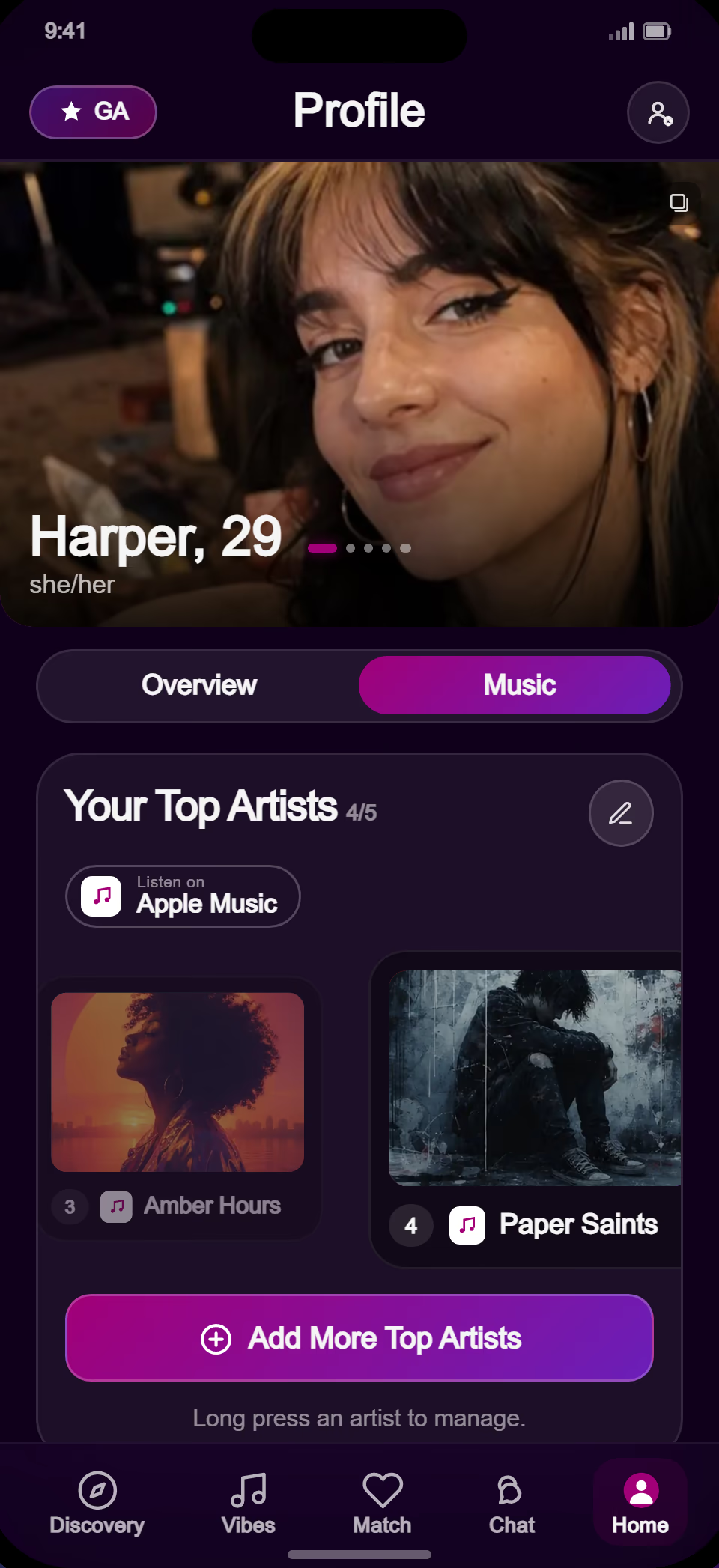
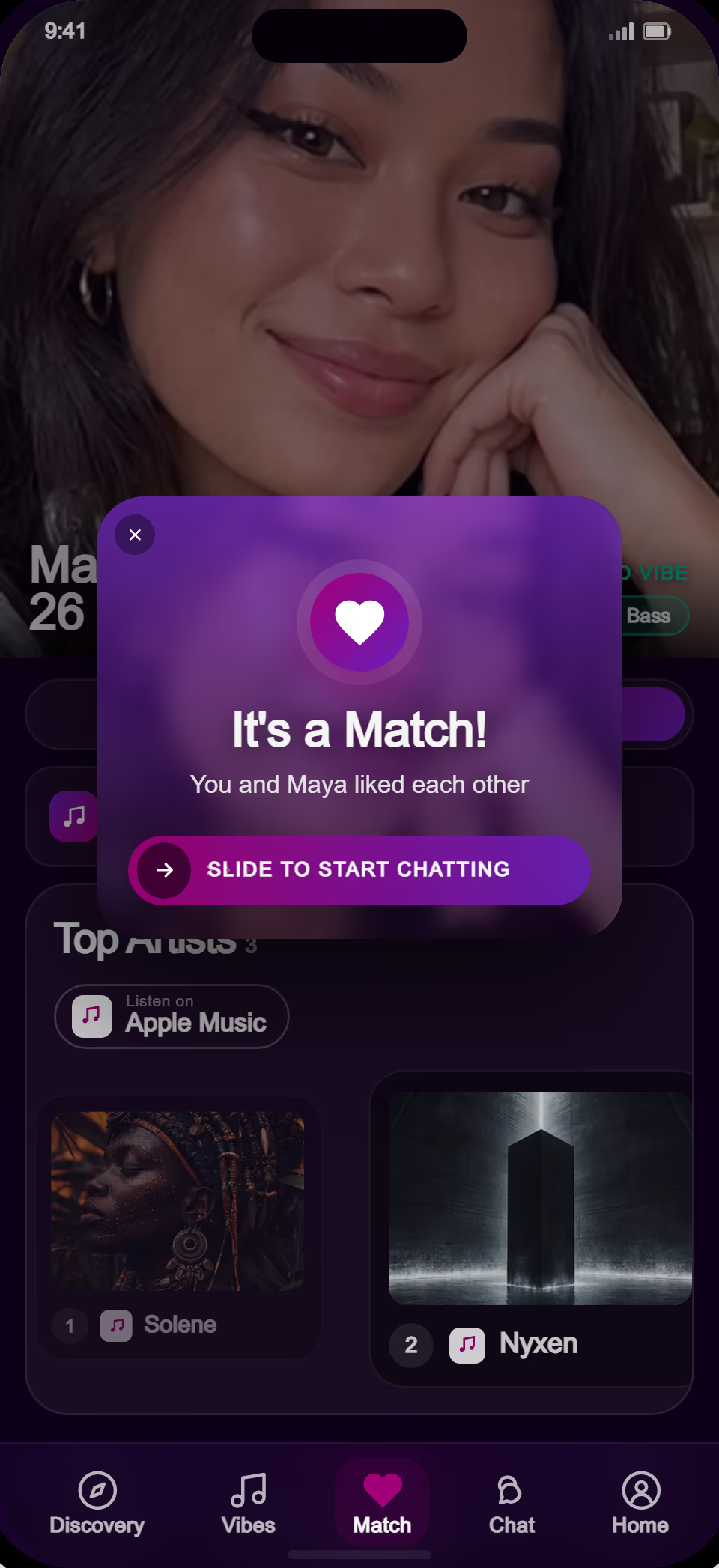
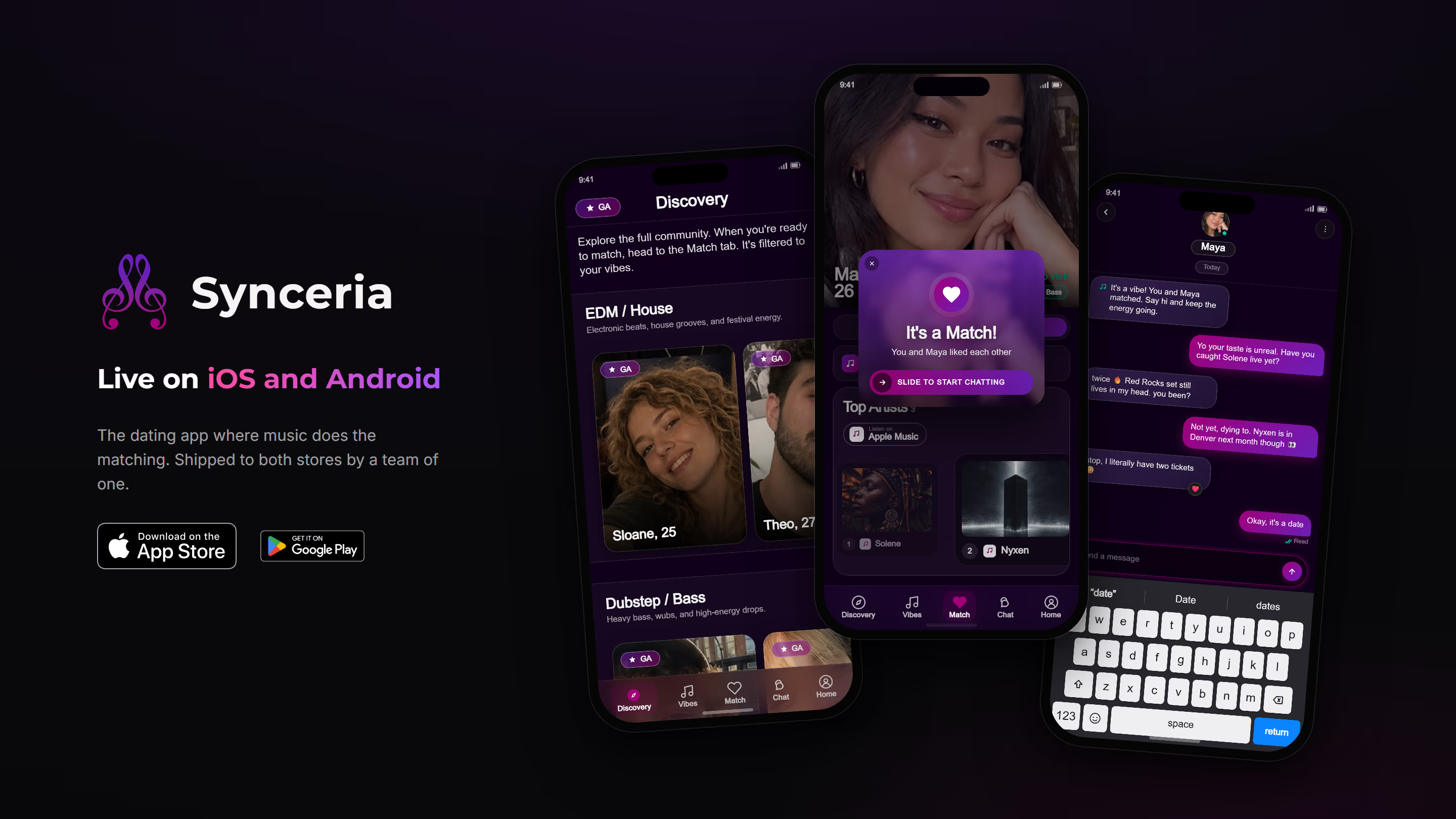
Members build a music profile from the Apple Music catalog, pick the genre vibes that filter who they meet, and match through a familiar swipe running on a deeper signal.
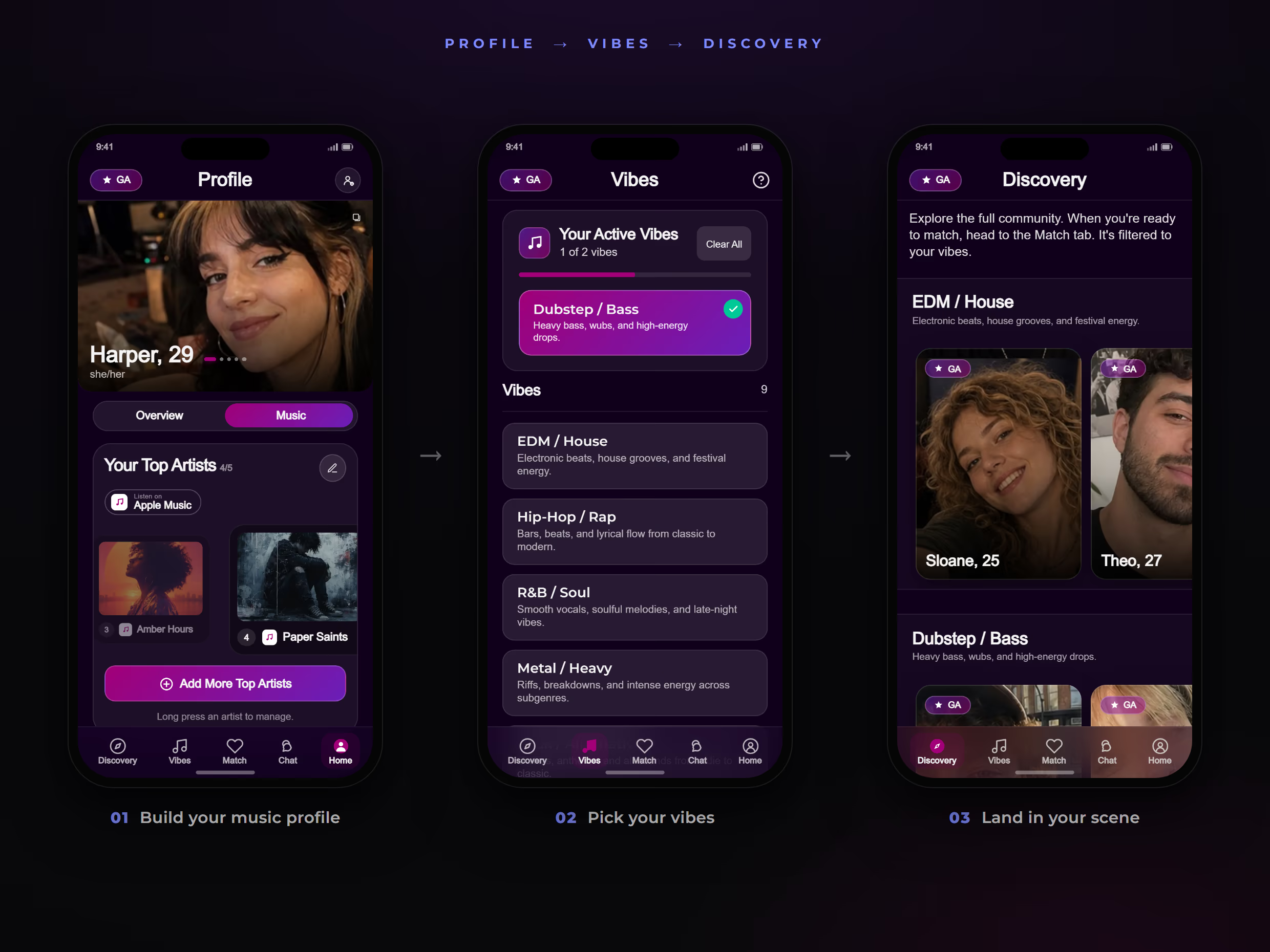
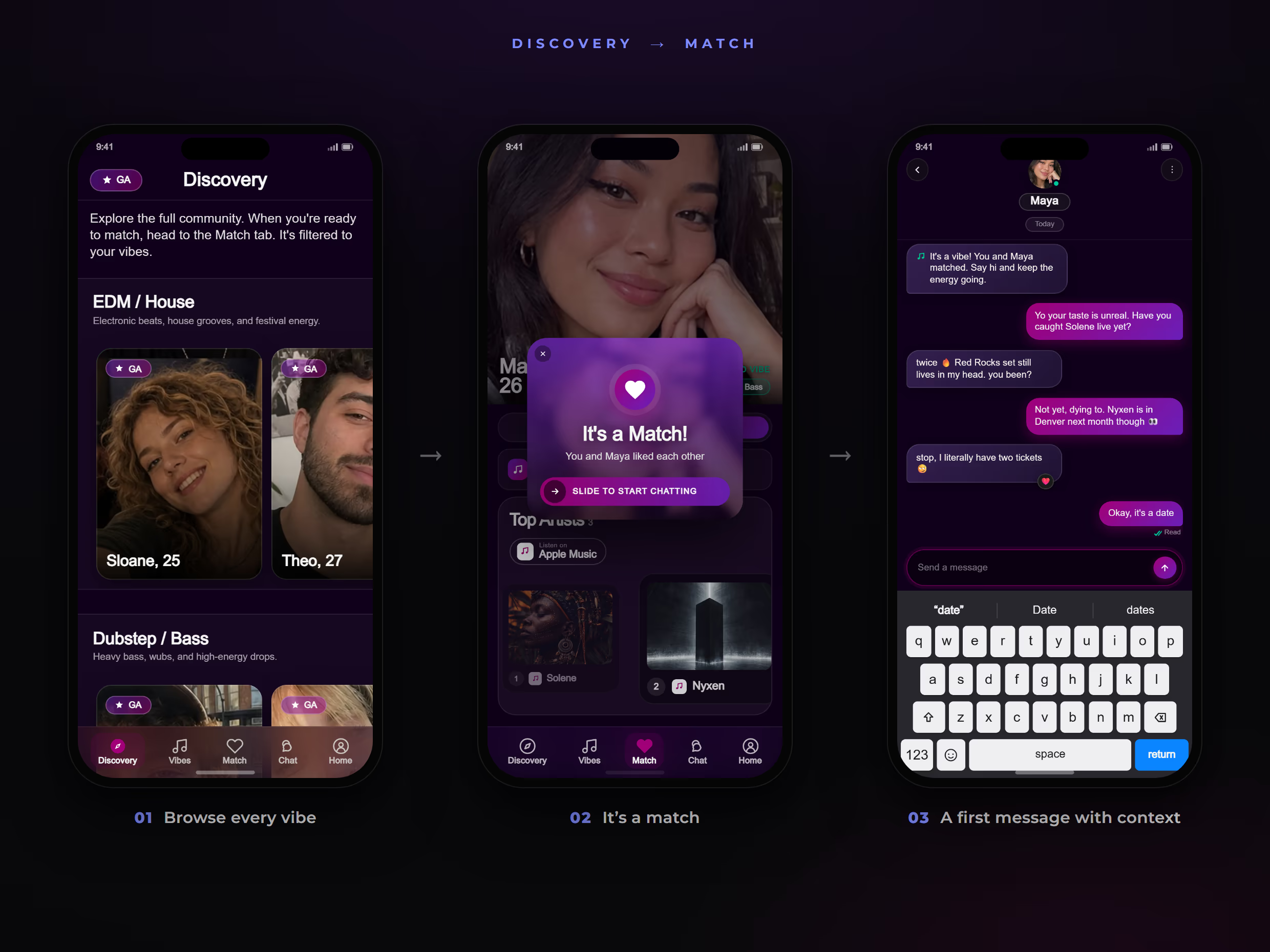
Onboarding is the load-bearing flow. Searching the catalog and adding favorite artists is the first moment the app delivers value, so it was built to feel like identity expression rather than a settings form, and finishing it lands members straight in Discovery. The three main tabs carry that identity from there: top artists live on the profile, active vibes filter who appears to match, and the Discovery feed opens the full community grouped by genre. Matching runs on like tiers with daily caps, and matched pairs move into real-time chat.
Friction was reduced wherever convention could serve. The 5-tab navigation mirrors patterns from the category leaders so muscle memory transfers, and permission copy explains exactly what is accessed and why.
What was deferred, and why
Scope discipline shipped the product:
- AI-powered matchmaking was scoped but deprioritized in favor of core matching
- Account-linking OAuth was simplified to catalog search
- Veriff identity verification was evaluated and deferred to post-launch
- AdMob was pulled over dependency conflicts
- The subscription model was refined from four tiers to three (GA, VIP, AllAccess), benchmarked against eight competitor pricing models and positioned to undercut the premium incumbents
A visual identity that survived two complete rebrands.
Vibin' became SSYNC became Synceria mid-development. The design language survived all three names because it was never coupled to any of them.
Each rename meant rebuilding store listings, domain strategy, and marketing assets from scratch while the product kept shipping. What carried through: a dark-mode-native interface, a palette that matured from the survey-validated Vibin' gradient into the shipped pink, purple, and teal system, and a Montserrat + Inter type system, the same pairing this page is set in.
Inter carries the body text, the same voice you are reading right now.
The rebrand playbook
- The logo ran through 30+ concepts, narrowed by a 35-concept icon usability map to the Vibe-drop direction
- The palette went through four explorations before the branding survey confirmed it with 50+ users
- Headings moved from Recoleta to Montserrat for a cleaner, more contemporary feel
- A complete error-state color system was documented to WCAG AA in both light and dark variants
A full production stack. One engineer. No shortcuts.
React Native and Expo on the front, Supabase underneath: PostgreSQL with row-level security, serverless edge functions, and five external integrations.
Supabase over Firebase was the defining call. Relational PostgreSQL made complex match-scoring queries tractable, with data isolation enforced at the database layer instead of in application code. Stream Chat carries production-grade messaging, RevenueCat unifies subscriptions across both platforms, and PostHog and Sentry cover analytics and crash reporting.
The music integration was deliberately built thin: catalog search and add, not deep account linking. The call was first made to stay inside Spotify's terms of service, and it paid off when Spotify later restricted production API access to large-scale apps: the entire music-identity layer was re-pointed to Apple Music with no change to how members build a profile. A platform shift that stranded plenty of small apps became a single-provider swap.
Stack detail
Zustand handles global state with minimal boilerplate. Expo Router provides file-based navigation with automatic deep links. EAS builds and deploys both platforms from a single codebase, and JS-only fixes ship over the air without store review.
- The rebuilt Apple Music integration runs a three-layer cache: Redis, then a Postgres artist cache, then the Apple Music API behind a signed developer token
- 197 migrations applied across the life of the schema, every one committed to the repo before touching production
- 14 scheduled pg_cron jobs run the data lifecycle: cleanup, metrics, retention, and SLA monitoring, hands-free
- A 5-phase migration moved the original repo into a monorepo mid-development
- The 21 edge functions handle catalog sync, subscription validation, notification delivery, and compliance intake
Rejected by both stores.Shipped on both stores.
The first submission failed on both platforms over privacy declarations. The fix became a system, not a patch.
Both rejections traced to the same root: app privacy declarations that did not precisely reflect how data moved under the hood. Rather than patch findings one at a time, I built a team of specialized AI compliance agents, systems I designed to audit the codebase, data handling, and privacy declarations against platform policy and current law. Both resubmissions passed.
Testing ran on physical hardware first, a registered personal iPhone and an older Android device, then TestFlight for beta. The build that reached the stores had already survived a structured red-team security audit, and compliance did not stop at launch: when the federal TAKE IT DOWN Act took effect in 2026, Synceria shipped a full NCII removal pipeline, a 48-hour takedown SLA with perceptual-hash re-upload prevention, ahead of the enforcement deadline.
The red-team audit
Six categories, and a remediation pass that closed 14 findings (3 critical, 6 high, 5 medium):
- Row-level-security policy verification across every table
- Monetization integrity: subscription enforcement cannot be bypassed
- Client-side threat modeling around token handling and API exposure
- Rapid-development pitfall detection
- Music-integration flow verification
- Edge-function key management and input sanitation
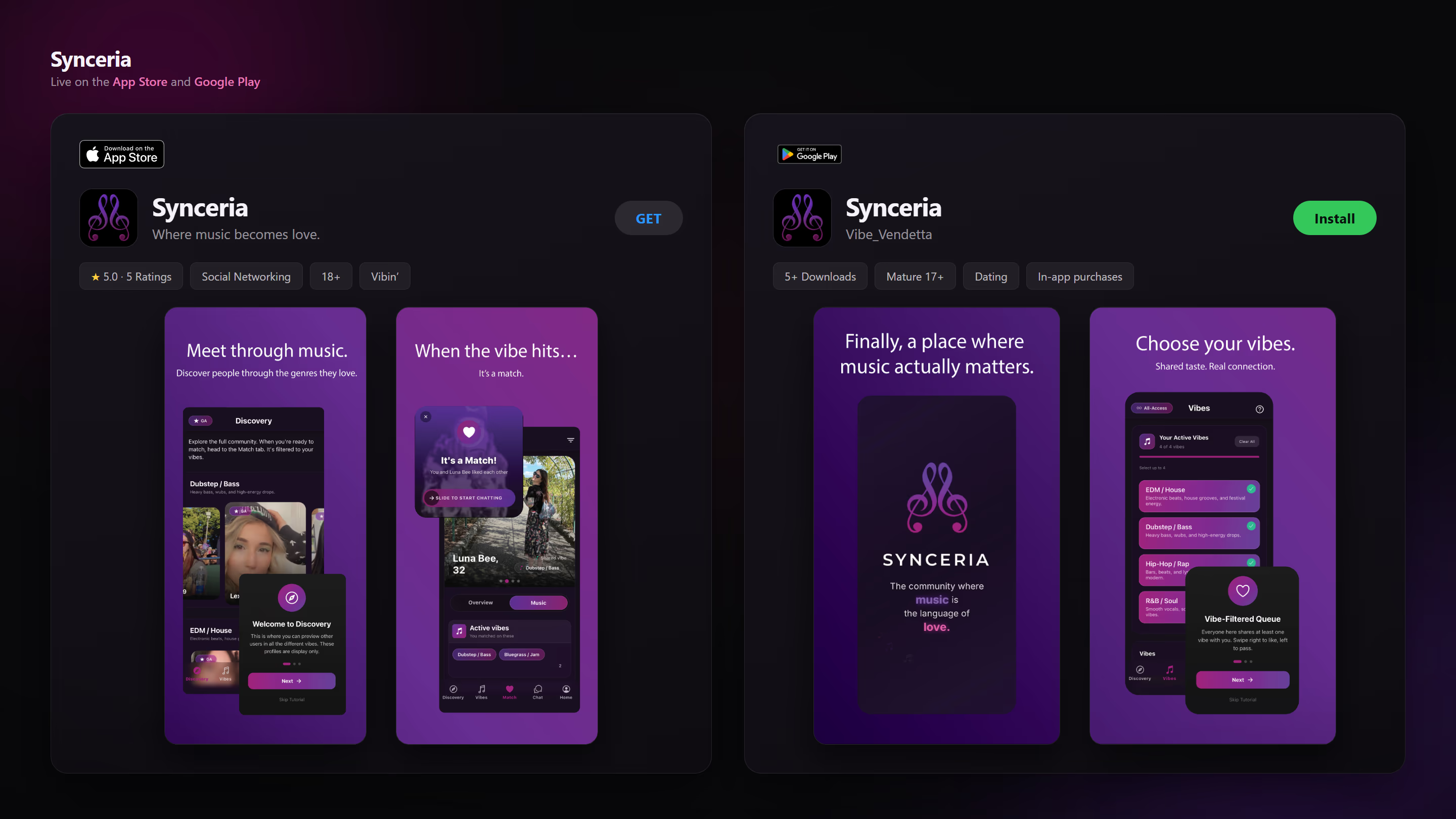
Live on both stores. Every role, owned.
Synceria shipped as a fully functional cross-platform product: catalog-backed music identity, genre vibes, matching, chat, and a three-tier subscription model. The artifact is the proof; the metrics story is ahead.
As a just-launched app with no marketing spend, early downloads are not the story. The meaningful outcome is the thing itself: researched, designed, built, tested, and launched by one person inside a two-person founding company, in about a year, through two complete rebrands. None of that is theoretical; it is proven by a product real users can download today.
Lessons from the year
The original 3-month estimate became a year, and the extension produced a better product: every lifecycle stage takes real time, and rushing any of them surfaces as problems later at higher cost.
Decouple brand identity from infrastructure early, because names change and architecture should not have to. And the early platform calls proved durable: row-level security at the database layer simplified the security audit, RevenueCat replaced weeks of payment infrastructure, and Stream Chat removed an entire class of realtime complexity.


The app UI shown on this page comes from the marketing site's coded recreations of the shipped product: real flows and screens, staged with placeholder personas and fictional artists.